Net Positive
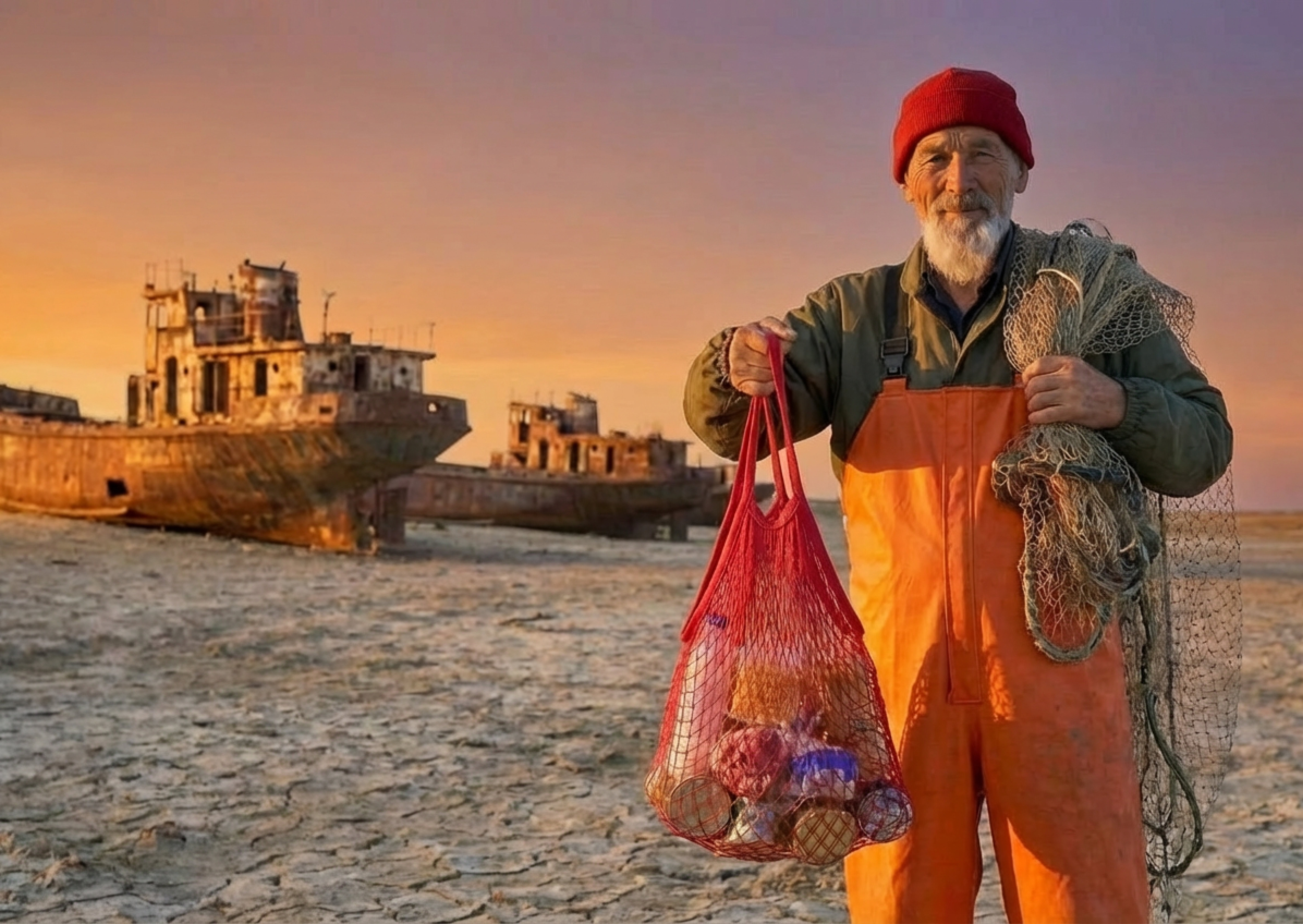
The dead fishing nets of the Aral Sea, turned into reusable bags. The symbol of one catastrophe, made into the instrument against another.
Uzbekistan produces 7 million tonnes of household waste a year. Less than 5% is recycled. The rest goes to landfill, and plastic is up to a fifth of it.
In parallel runs another ecological wound: the Aral Sea. On its dried shores lie fishing nets with nothing left to catch. They became a symbol of loss.
The symbol of one catastrophe becomes the instrument against another.
Craftspeople from the Aral's coastal villages turn the real nets into bags. Each carries a QR code with one fisherman's memory of the sea.
The bags are sold, and the money pays local people to clean up the Aral. The value of the object goes straight back into the mess it came from.
They live in the fresh-fish departments across Korzinka's stores. Dead nets, the fish aisle, a bag you paid for and keep: the loop closes where the loss began.
Sold to the client. In production for 2027 rollout.
Top-scored by an international jury of creative directors from Wieden+Kennedy Amsterdam and SUPERKRAFT, on METHOD, the creative program led by Denis Yeliseev.